Cummins Onan Generator Impeller Removal — No Room, No Hose Removal, Clean Pull | ImpelPro
Updated: Aug 6
How Do You Remove a Cummins Onan Generator Impeller in Tight Space?
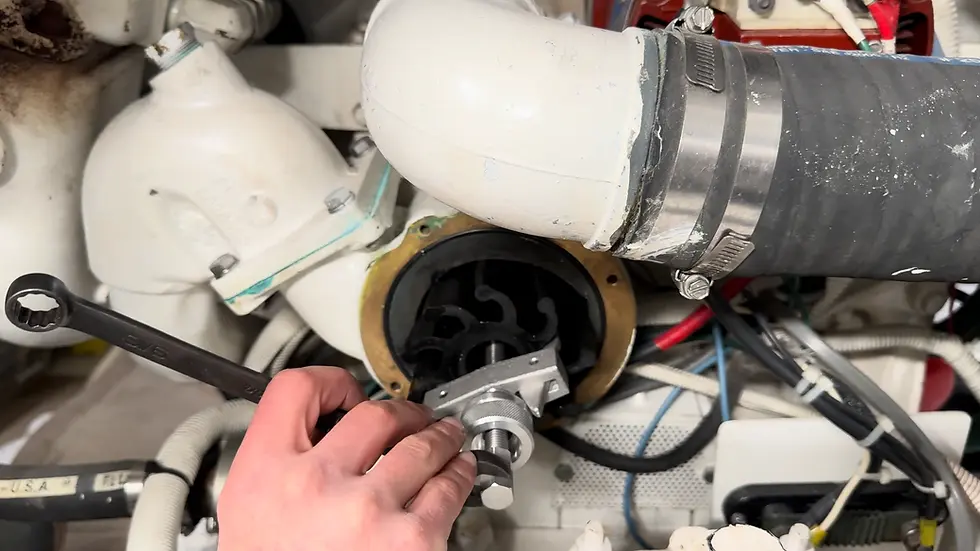
Close the seawater inlet valve and open the sea strainer drain so the suction side drains down. Remove the three-bolt pump cover, then set the puller arms parallel with the rod flush to the strongback so the tool slides into the tight space. Seat the arms, tighten the thumbscrew to grip the impeller, and use a ratcheting wrench to wind it out. Because the force stays centered on the shaft, the impeller comes out straight with almost no swing clearance, so you don't have to pull hoses or fuel lines to get it done.

Intro
Generator installs are usually tighter than the main engines, and this Cummins Onan is a perfect example: fuel lines in the way, almost no tool clearance, no room to swing anything. That's the setup where most people either give up or start yanking with whatever fits and damage something. In this video, Eddie pulls the impeller clean without removing a single hose or taking the pump apart.
"If this had a big T-handle on the back, there's no chance you'd swing it in here without hitting something. That's the whole reason the tool is built small." — Eddie Protzeller
What You’ll Learn
How to remove an impeller on a Cummins Onan generator
How to prep the system by draining the suction side properly
Why tool setup matters in tight generator installs
How to extract an impeller with almost zero swing clearance
How to avoid damaging hoses, fuel lines, and surrounding components
Step-by-Step Overview
Close the seawater inlet valve
Open the sea strainer drain to introduce air and drain the system
Remove the three-bolt pump cover
Position the tool arms parallel and the rod flush with the strongback
Insert the tool carefully into the tight space
Seat the arms and tighten to engage the impeller
Use a ratcheting wrench to begin extraction
Continue a controlled pull with minimal swing
Remove the impeller cleanly without disturbing surrounding components
Mechanic Insight
Generator installs are often tighter than main engines, with little room for tools or even your hands. In a spot like this, being able to apply even, centered force without needing swing clearance is everything. When the tool works in-line with the shaft and stays clear of the hoses and fuel lines around it, the impeller comes out straight instead of binding, and nothing nearby gets damaged in the process.
Why This Job Goes the Way It Does
Why removal is tough on a Cummins Onan generator. These generators usually sit in tight compartments with minimal clearance, so positioning a tool and applying even force is hard.
Why you drain the sea strainer first. Opening the drain lets air into the system so the suction side drains down, which means less water spilling out and a cleaner, easier job.
Why standard pullers fail in tight generator spaces. Many need a big handle or extra room to operate, and that room does not exist with hoses and fuel lines crowding the pump.
What makes an impeller bind during removal. Uneven pulling force or cramped access lets the impeller twist in the housing, which makes it fight you on the way out.
Why centered force matters. Equal pressure on both sides keeps the impeller aligned with the shaft, so it slides out smooth and controlled instead of cocking sideways.
Full Transcript
Eddie: Hey everyone, it's Eddie from ImpelPro. Today we're working on a Cummins Onan generator down here on this yacht. We've already got the seawater inlet valve closed and the sea strainer drain open. So we'll take the three-bolt cover off, get a little air in it, let the rest of the water drain out of the system, and pull the impeller.
You can hear the gurgling as air gets into the system. With gravity and that air, it's draining out the suction side of the raw water system on this generator.
There's not much room to get your hands in here, let alone a bigger tool. But with our small tool, a shorter rod, and the design of it, you'll see in a second how well it fits in the most cramped spaces.
We'll start with the tool arms parallel, a little more closed, and the threaded rod flush with the bottom of the strongback. It's a little tricky one-handed, but you work the tool in until the bottom of the teeth are touching the bottom of the bore, then tighten down the knurled thumbscrew.
Again, the design of the tool is what matters here. There are no knobs to get in the way of this hose or down here. Right now the nut on this rod is right up against the fuel line, but we can still use a ratcheting wrench to wind it in and react against the shaft to get the impeller out.
If we had a big T-handle on the back of this, there's no chance we could use it safely in here without damaging something. Imagine trying to swing a T-handle in this space. You just don't have the room.
Keep winding it in. We're getting close to pulling it out, and look how easy it is to just turn the threaded rod. When you react off the middle and keep the same force on both sides, it stays easy, because you're not putting it into a bind.
If I were using my hand, I might pull it one way or the other and get it into a bind. And screwdrivers, or two sets of needle nose pliers? There's no way to get a good, even pull. That's what makes this job seem a lot harder than it actually is, and it's how the damage happens.
Common Questions
Why is impeller removal difficult on a Cummins Onan generator?
These generators are usually installed in tight compartments with minimal clearance, which makes it hard to position a tool or apply even force. A compact tool that works in-line with the shaft is what lets you do the job without removing hoses.
Can you remove a generator impeller without removing the hoses or pump?
Yes. With a compact puller that applies centered force and needs almost no swing clearance, you can wind the impeller straight out with the hoses and fuel lines still in place, which avoids the extra disassembly and the risk that comes with it.
What causes an impeller to bind during removal?
Uneven pulling force or cramped access lets the impeller twist inside the housing, which makes it fight you on the way out. Centered, equal pressure keeps it aligned with the shaft.
Why is centered force important during extraction?
Equal pressure on both sides keeps the impeller aligned with the shaft, so it slides out smooth and controlled instead of cocking sideways and jamming.
Related Marine Maintenance Videos
What Is the ImpelPro Impeller Puller?
The ImpelPro impeller puller is built for tight-access marine work, pulling impellers with controlled, centered force even when there's no room for traditional tools. See what makes it different: What Makes ImpelPro Different from Other Impeller Removal Tools.
Topics Covered
Cummins Onan generator impeller removal
generator cooling system maintenance
tight space impeller removal
marine impeller removal
seawater pump service
impeller troubleshooting
About the Author
Eddie Protzeller is a professional marine mechanic and inventor of the ImpelPro® Impeller Puller, with 15+ years working on tugboats, yachts, inboard engines, and marine generators. He specializes in boat cooling systems and impeller maintenance. For more about Eddie, visit About Us.

Comments