Detroit Diesel 12V92 Impeller Removal: Full Pull, Clean, and Reinstall (Large Puller)
Updated: Aug 6
How Do You Remove an Impeller on a Detroit Diesel 12V92?
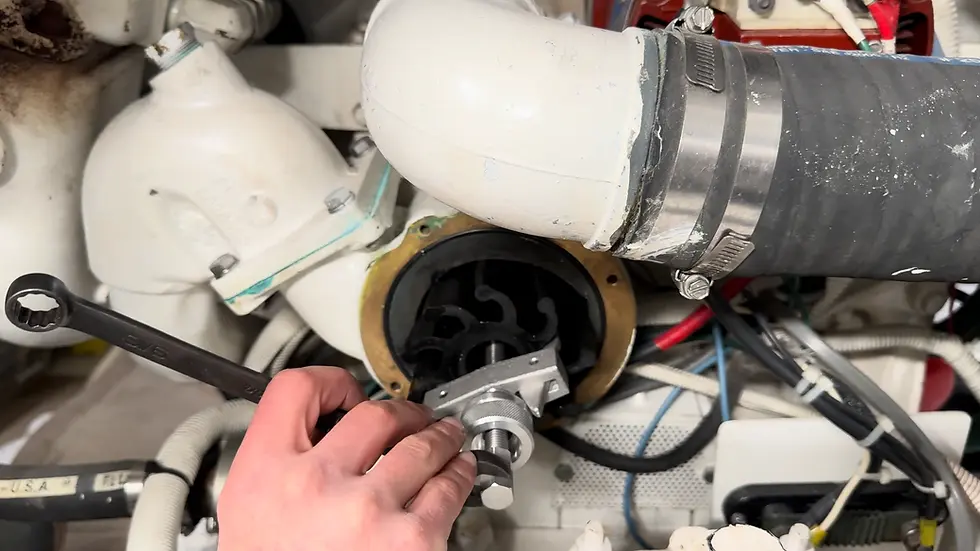
The impeller pump sits at the rear of the 12V92, so access is tight. Close the seacock, remove the four cover bolts and the lid, and take out the center rubber plug. Position the puller arms 180 degrees apart but 90 degrees off the cam, in the two widest sections of the impeller, then seat the tool on the shaft nub and tighten the arms evenly. Pull with a 9/16" wrench and finish by hand. Inspect and clean the shaft, housing, and O-ring groove, then lube and reinstall the new impeller without hammering, since a ceramic seal sits underneath.
Intro
The 12V92 Detroit is a big engine with the impeller pump tucked at the back, where clearance is tight and a sloppy pull can score the housing or leave debris in the system. In this video, Eddie runs the whole job start to finish: removal, inspection, cleaning, and reinstall, no shortcuts. Get the tool positioned right and this goes smooth. Rush it and you make work for yourself later.
"When you put it back, don't reach for a hammer. There's a ceramic seal sitting underneath, and one good whack can ruin it. Wiggle it, use steady pressure, and it seats. That's the whole trick." — Eddie Protzeller
What You’ll Learn
How to remove an impeller on a Detroit Diesel 12V92
Where to position the puller arms relative to the cam
How to extract the impeller without damaging the housing
What to inspect on the shaft and pump after removal
How to clean, lubricate, and reinstall the impeller
Step-by-Step Overview
Locate the impeller housing at the rear of the engine
Remove the cover bolts and take off the lid
Remove the center rubber plug and clean the area
Identify the cam position and choose proper arm placement
Insert the tool with arms fully extended and the rod flush
Seat the tool on the shaft nub and tighten the arms evenly
Use a 9/16" wrench or ratchet to extract the impeller
Finish removal by hand and release the tool
Inspect the shaft and housing for wear or damage
Clean the O-ring groove, housing face, and lid
Lubricate the impeller, shaft, and bore with water-soluble grease
Reinstall the impeller carefully, without hammering
Seat the O-ring and reinstall the lid in an X pattern
Open the through-hull valve and restore water flow
Mechanic Insight
On a big marine diesel like the 12V92, impeller removal isn't just about getting it out. It's about protecting the pump on the way. Bad technique can score the housing, nick the shaft, or wreck the ceramic seal during reinstall. Centered force coming out and controlled pressure going back in are what keep the system reliable.
Why This Job Goes the Way It Does
Why removal is harder on a 12V92. The pump is mounted at the rear of the engine with limited clearance, which makes tool positioning and even pressure tougher to get right.
Why you place the puller arms 90 degrees off the cam. Setting the arms in the two widest sections lets them fully engage without binding, for a centered, balanced pull.
What happens if you start with the tool partially closed. You risk pinching the impeller unevenly, which causes binding or damage on the way out. Start with the arms fully extended and the rod flush.
Why you inspect the shaft after removal. Any scoring, dents, or debris will fight a clean reinstall and lead to premature wear or seal damage.
Why you never hammer the impeller back in. There's a ceramic seal beneath the impeller, and impact can crack it, which leads to leaks and pump failure. Wiggle and press instead.
Full Transcript
Eddie: Good morning everyone. It’s Eddie from ImpelPro. Today we’re working on a 12V92 Detroit.
At the back of the engine, you’ll find the impeller housing and cover. We’ll start by removing the four bolts and taking off the lid.
As you loosen it, you may hear a little air and see some water — that’s normal. The seacock has already been closed.
Next, remove the small rubber plug in the center using a flathead screwdriver. Set that aside and wipe everything down.
We’ll leave the O-ring in place for now.
Looking inside, you can see the cam location. We want to position the puller arms 180 degrees apart, but 90 degrees off the cam — in the two widest sections of the impeller.
If you try to place the arms in the narrower sections, they won’t fully seat before tightening.
Start with the threaded rod flush and the arms fully extended. This prevents pinching as you position the tool.
Insert the tool and then wind the threaded rod down until it touches the shaft nub. This ensures you’re reacting off the shaft during the pull.
Next, tighten the knurled knob. As you do this, you’ll feel the teeth begin to set into the impeller.
Once the arms are fully engaged, use a 9/16" wrench or a socket and ratchet to begin extracting the impeller.
The bearing in the tool allows smooth force transfer, making the pull easier and more controlled.
As you continue, the impeller will begin to move outward. Near the end, you can usually finish removing it by hand.
Once removed, loosen the knurled knob to release the arms and remove the tool.
Now inspect the housing and shaft. Run your hand around the shaft and check for any scoring, dents, or debris that could cause issues during reinstall.
If everything looks good, remove the O-ring and clean the groove using a pick and wire brush.
Clean the housing face and remove any corrosion.
Next, clean and inspect the lid. Make sure nothing protrudes above the sealing surface that could affect the seal.
Now we’ll lubricate the impeller using water-soluble grease. Coat the vanes, the ends, and also apply grease to the bore and shaft.
This ensures proper lubrication until water flow is restored and helps prevent corrosion between the shaft and impeller.
When reinstalling, avoid using a hammer. There is a ceramic seal underneath, and impact can damage it.
Instead, wiggle the impeller gently and apply steady pressure until it seats fully.
Once installed, apply a small amount of lubricant to the O-ring and place it back into the groove.
Reinstall the rubber plug and ensure it is fully seated.
Position the lid in the same orientation as before, aligning with the cam wear pattern.
Install the bolts hand-tight, then tighten them in an X pattern to ensure an even seal.
Finally, reopen the through-hull fitting to restore water flow to the system.
Common Questions
Why is impeller removal harder on a Detroit Diesel 12V92?
The pump is mounted at the rear of the engine with limited clearance, which makes tool positioning and even pressure harder to achieve. The right approach is to start with the arms fully extended and react off the shaft nub.
Why do you position the puller arms 90° off the cam?
Placing the arms in the two widest sections of the impeller lets them fully engage without binding, which gives a centered, balanced pull. Arms set in the narrow sections won't seat properly before tightening.
What happens if you start with the tool partially closed?
You risk pinching the impeller unevenly, which can cause binding or damage during extraction. Start with the threaded rod flush and the arms fully extended.
Why should you inspect the shaft after removing the impeller?
Any scoring, dents, or debris on the shaft can prevent a proper reinstall and lead to premature wear or seal damage, so check it before installing the new impeller.
Related Marine Maintenance Videos
What Is the ImpelPro Impeller Puller?
The ImpelPro impeller puller removes rubber impellers from marine pumps with balanced, centered force, which helps prevent damage during removal, even on large diesels like the Detroit 12V92. See what makes it different: What Makes ImpelPro Different from Other Impeller Removal Tools.
Topics Covered
Detroit Diesel 12V92 impeller removal
marine impeller replacement
seawater pump maintenance
impeller reinstall procedure
marine diesel cooling systems
impeller inspection and cleaning
About the Author
Eddie Protzeller is a professional marine mechanic and inventor of the ImpelPro® Impeller Puller, with 15+ years working on tugboats, yachts, inboard engines, and marine generators. He specializes in boat cooling systems and impeller maintenance. For more about Eddie, visit About Us.


Comments